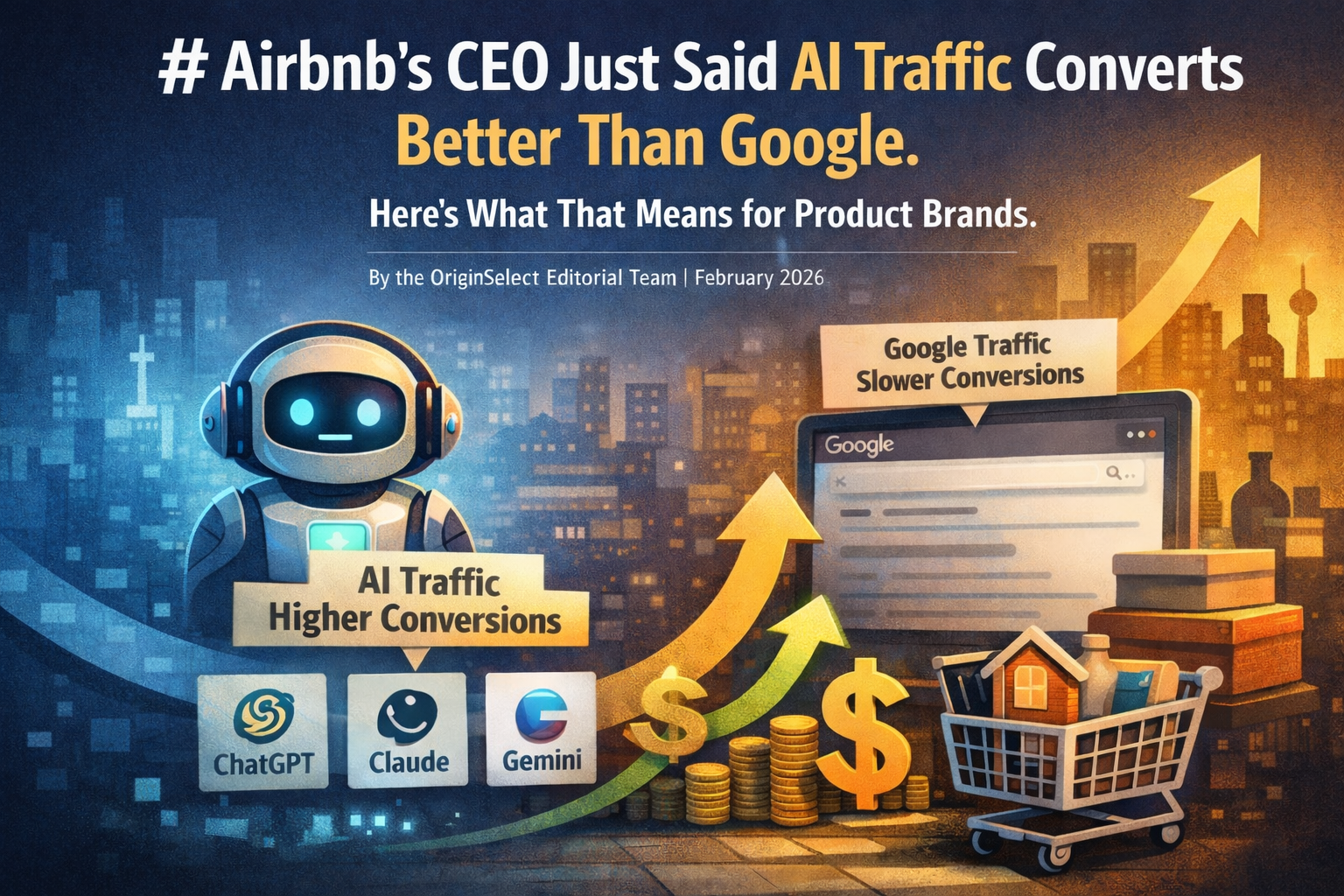
What Chesky Actually Said
In a February 2026 earnings call, Brian Chesky disclosed that Airbnb is now receiving "meaningful" referral traffic from AI chatbots—and that this traffic converts at a higher rate than traditional search. He specifically called out ChatGPT and other large language models sending users directly to Airbnb listings via conversational recommendations.
"We're seeing AI-driven traffic convert at rates higher than Google," Chesky stated. He described AI referrals as "high-intent" visitors who arrive with specific needs already defined through conversation.
Why AI Traffic Converts Better
When someone asks ChatGPT "What's the best eco-friendly skincare brand?", they're further down the purchase funnel than someone typing "skincare" into Google. AI chat narrows options, pre-qualifies intent, and delivers a short list—not ten blue links plus ads. The user arrives at a product page already convinced it's worth considering.
Research from Seer Interactive found AI-referred visitors have conversion rates 4–9x higher than Google organic traffic. Semrush data shows ChatGPT drove 164 million referral visits in December 2025 alone, with referral traffic growing 200%+ year-over-year.
The Numbers Behind AI-Referred Visitors
- 164 million referral visits from ChatGPT in December 2025 (Semrush)
- 200%+ year-over-year growth in AI referral traffic
- 4–9x higher conversion rates vs. Google organic (Seer Interactive)
- Higher average order values from AI-referred sessions
- Lower bounce rates — AI visitors engage more deeply with product pages
What This Means for Product Brands
If you sell physical products—food, skincare, home goods, baby gear—this shift matters. Here's why: AI assistants don't show 10 results. They show 1–3. Being in that shortlist means outsized traffic and revenue. Being absent means invisibility to a growing channel.
The New Funnel
Traditional SEO funnel: Search → Click → Browse → Maybe Buy. AI funnel: Ask → Get Recommendation → Visit → Buy. The AI funnel is shorter, higher-intent, and increasingly where consumers start their product research.
Five Things Brands Should Do Now
1. Structure Your Product Data for AI Consumption
AI models pull from structured data more reliably than free-form text. Implement comprehensive schema markup—Product, Brand, Organization, FAQ, Review schemas. Include price, availability, certifications, and ingredient lists.
2. Build Entity Authority
AI assistants recommend brands they "understand" as entities. Get your brand into knowledge bases: Wikipedia, Wikidata, Crunchbase, industry directories. Consistent NAP (Name, Address, Phone) across the web helps AI models build confidence.
3. Create Question-Shaped Content
AI training data heavily indexes Q&A patterns. Structure content around real customer questions. Use FAQ schema. Write comparison guides. Create "best of" content with clear reasoning, not just lists.
4. Get Cited by Authoritative Sources
AI models weight citations from trusted domains. PR mentions, industry publications, certification directories, and editorial reviews all contribute to whether an AI will recommend your brand.
5. Monitor Your AI Visibility
Check what ChatGPT, Perplexity, and Gemini say about your brand. Search for your product categories in AI tools. Track AI referral traffic in analytics. This is the new "search rankings" check.
How OriginSelect Approaches AI Visibility
OriginSelect has been optimizing for AI discoverability since 2025. Our approach includes comprehensive schema markup, structured product data, values-based entity signals, and content designed for both human readers and AI extraction.
How We Researched This AI Traffic Analysis
This article is a market analysis report, not a product ranking. We verified primary executive statements, cross-referenced them with independent industry research, and then translated the implications for product brands.
- Primary source validation: Checked executive comments against original earnings call context and first-party statements.
- Independent corroboration: Cross-referenced conversion and referral trends with third-party analytics and market research publications.
- Clear metric framing: Interpreted conversion and intent metrics using consistent definitions to avoid misleading comparisons.
- Editorial independence: No brand paid for inclusion, emphasis, or conclusions in this report.
Frequently Asked Questions
Is AI traffic actually replacing Google traffic?
Not replacing—supplementing. Google still drives the majority of web traffic. But AI referral traffic is the fastest-growing channel, and its conversion rates suggest it will become increasingly important for e-commerce revenue.
How do I check if AI chatbots mention my brand?
Ask ChatGPT, Perplexity, Gemini, and Microsoft Copilot about your product category. Search for "best [your category] brands" and see if you appear. Check your analytics for referral traffic from chat.openai.com, perplexity.ai, and similar domains.
Does schema markup actually help with AI recommendations?
Yes. AI models trained on web data disproportionately index structured data because it's unambiguous. Product schema, FAQ schema, and Organization schema all provide clear signals that help AI understand and recommend your brand.
What's the difference between AEO and traditional SEO?
Traditional SEO optimizes for search engine rankings (10 blue links). Answer Engine Optimization (AEO) optimizes for AI-generated answers and recommendations. AEO emphasizes structured data, entity authority, and question-answer content patterns.
How much AI referral traffic should brands expect?
Currently, AI referrals represent 1–5% of total traffic for most e-commerce sites, but growing rapidly. Early movers in AI optimization are seeing 10–15% of traffic from AI sources, with significantly higher conversion rates than other channels.
Last updated: February 19, 2026