📌 Editor's Note (September 2026): This update adds an evidence review and clarifies the difference between scale conditioning and softening. Sources were reviewed September 7, 2026. This is not a hands-on installation test, a stock check, or a guarantee of results.
If you're dealing with hard water scale on taps, kettles, heaters, or pool equipment, HydroFLOW's salt‑free, chemical‑free conditioners are one option worth understanding before you buy — alongside what the available evidence does and doesn't support.
Looking for broader water tips? Explore our Home guides for maintenance and efficiency ideas.
Does HydroFLOW Really Work?
HydroFLOW is intended to control scale, not remove the minerals responsible for water hardness. There is experimental support for aspects of scale control in particular test systems, but this review does not establish a reliable success rate for the current Canadian residential models in occupied homes. Our judgment: consider it for a clearly defined scale problem only after checking suitability and purchase conditions — not as an equivalent replacement for hardness removal or drinking-water treatment. (HydroFLOW Canada, Pearl product page; Jiang et al., 2019; Shults & Williams, ASME abstract)
First, Decide What You Need Your Water Treatment to Do
Water hardness mainly reflects dissolved calcium and magnesium. Conventional ion-exchange softening reduces hardness; a TDS reading measures a different, broader property. (Health Canada, Operational Parameters guideline)
| Your goal | What to investigate |
|---|---|
| Reduce measured hardness | A treatment specifically designed and appropriately certified for that purpose — not a scale-control promise. |
| Reduce stubborn deposits or make cleaning easier | Scale-management options, with outcomes assessed at the affected equipment or fixtures. |
| Address a well-water contaminant or drinking-water safety concern | Appropriate testing and treatment matched to the identified problem. Do not infer safety from fewer visible deposits. |
Health Canada recommends checking certification against the performance standard and specific claim that matter to your problem. That guidance does not certify or endorse HydroFLOW. Do not discontinue necessary filtration, disinfection or other prescribed treatment on the basis of this review. For private wells, use testing and qualified local advice to establish what is needed. (Health Canada, Drinking water and health: Treatment; Health Canada, Treat your well water)
How HydroFLOW Is Intended to Work
Hydropath describes a powered unit clamped around a pipe, using a coil and ferrite core to induce an electrical signal. Its proposed scale-control mechanism concerns how deposits form and adhere. This is the manufacturer's explanation; it should not be mistaken for a guarantee of an effect in every water system. (Hydropath, How it works)
What the Research Supports — and What It Doesn't
A 2019 study by Jiang and colleagues tested HydroFLOW S38 and HS48 units in a reverse-osmosis pilot using very hard, brackish groundwater. Treated operation showed slower membrane-performance decline and deposits that were easier to flush, but scaling was not eliminated. This was an accelerated desalination experiment, not a Canadian household trial. HydroFLOW USA supplied the units; the authors reported National Science Foundation funding and no conflict of interest. It supports consideration of scale control under those conditions, not a household success rate or savings promise. (Jiang et al., Water, 2019, 11(5), 1015)
An ASME conference abstract by Holton Shults and Stuart Williams describes a heated-water-loop comparison of two HydroFLOW devices with untreated controls. Scale on treated heating elements was easier to scrape off. This is relevant to deposit adhesion, but the abstract alone does not establish long-term results in occupied homes. We did not access the full paper, verify the exact Canadian models, or establish its replication and funding details. (Shults & Williams, University of Louisville, ASME abstract 166296)
Our assessment is support in specific experimental settings, with important uncertainty about household outcomes. Neither a seller testimonial nor the mere existence of a study tells a particular buyer how much benefit they will get. Do not substitute a laboratory performance metric for a promised percentage reduction in household limescale, energy bills or maintenance costs.
This is a bounded evidence review, not an exhaustive systematic review. We have not personally installed or tested these units. We also have not established that each currently sold Canadian model is identical to a model used in the research. Those limits warrant careful purchase decisions; they do not justify claiming that there is no research at all.
How to Evaluate a Scale-Control Purchase Meaningfully
This is our proposed decision checklist, not a validated test method or a guarantee-claim procedure:
- Define the problem before purchase. Record whether the problem is a stubborn deposit, cleaning effort, hardness, or something else. Choose an observable outcome rather than "better water."
- Check suitability and terms in writing. Ask the seller to confirm the exact model, installation location and pipe compatibility, plus the evidence and dates needed for any performance claim.
- Document a safe baseline. Use accessible fixtures and dated photographs, noting your cleaning method and how long deposits have had to form. Do not dismantle heaters or pressurized equipment for this exercise.
- Keep the comparison understandable. Record changes in water use, cleaners, other treatment and relevant source-water information. A change after installation is not automatically proof that the device caused it.
- Set a review date within the agreed terms. Continue routine equipment care. An operating indicator is not a measurement of the outcome you wanted.
Do not treat a single TDS reading as an effectiveness verdict: it neither isolates hardness nor directly measures deposit adhesion. Test the property relevant to the claim. (Health Canada, Operational Parameters guideline)
Installation, Maintenance and Running Cost
HydroFLOW Canada's Pearl description says the unit attaches externally without plumbing modifications, but that does not replace the instructions supplied with the exact model. Follow those instructions for location, physical fit, power and protection. Seek qualified help where the installation conditions are unclear. (HydroFLOW Canada, Pearl product page)
There is no salt or treatment media to replenish in the conditioner itself. Regular maintenance of the heater and other equipment still matters; the seller explicitly says the device does not replace those procedures.
Treat purchase price, any installation/protection costs and electricity as costs — not as evidence of savings. This research did not establish a household payback period or a dependable time until visible improvement. We therefore do not promise lower bills, an appliance-life extension or a fixed weeks-to-months result. Our advice is to assess the specific outcome and total cost rather than rely on a universal savings estimate.
Canadian Warranty, Returns and Performance Guarantee Are Different
The Canadian pages reviewed describe separate arrangements. Consult the linked terms before ordering:
| Arrangement | Material distinction |
|---|---|
| Ordinary return | Request within 30 days of receipt; unused-condition, packaging and proof-of-purchase requirements apply, and approval is required before return shipment. This is not a general installed-product trial. (refund policy) |
| Limited product warranty | Three-year defect coverage is described, with conditions including proper installation and adequate surge protection. A functioning device and a satisfactory household outcome are different questions. (satisfaction guarantee & limited warranty) |
| Performance guarantee | The wording refers both to 12 months from purchase and to claims more than six but no later than 12 months after installation, concerning failure to prevent encrusting scale. Ask the seller to clarify your start/end dates and evidence requirements in writing. (satisfaction guarantee & limited warranty) |
The terms also exclude specified consequential losses, including leaks revealed by scale removal. Do not read a money-back headline as an unconditional promise covering every outcome or expense.
Quick Picks by Scenario
These are HydroFLOW's own size-based categories, not an independent compatibility check. Decided that scale conditioning matches your goal you defined above? Confirm your actual pipe and installation requirements — using our HydroFLOW Pearl vs Pearl PLUS vs HS40 comparison or by asking the seller — rather than choosing solely by house area.
- Small homes, RVs & cottages (≤ ~1,500 sq ft): Buy HydroFLOW Pearl (Canada)
- Typical single‑family homes (~1,500–3,000 sq ft): Buy HydroFLOW Pearl PLUS (Canada)
- Large homes (> ~3,000 sq ft): Buy HydroFLOW HS40 (Canada)
- Pools & spas: Buy HydroFLOW K40 AquaKlear (Canada)
HydroFLOW Models at a Glance

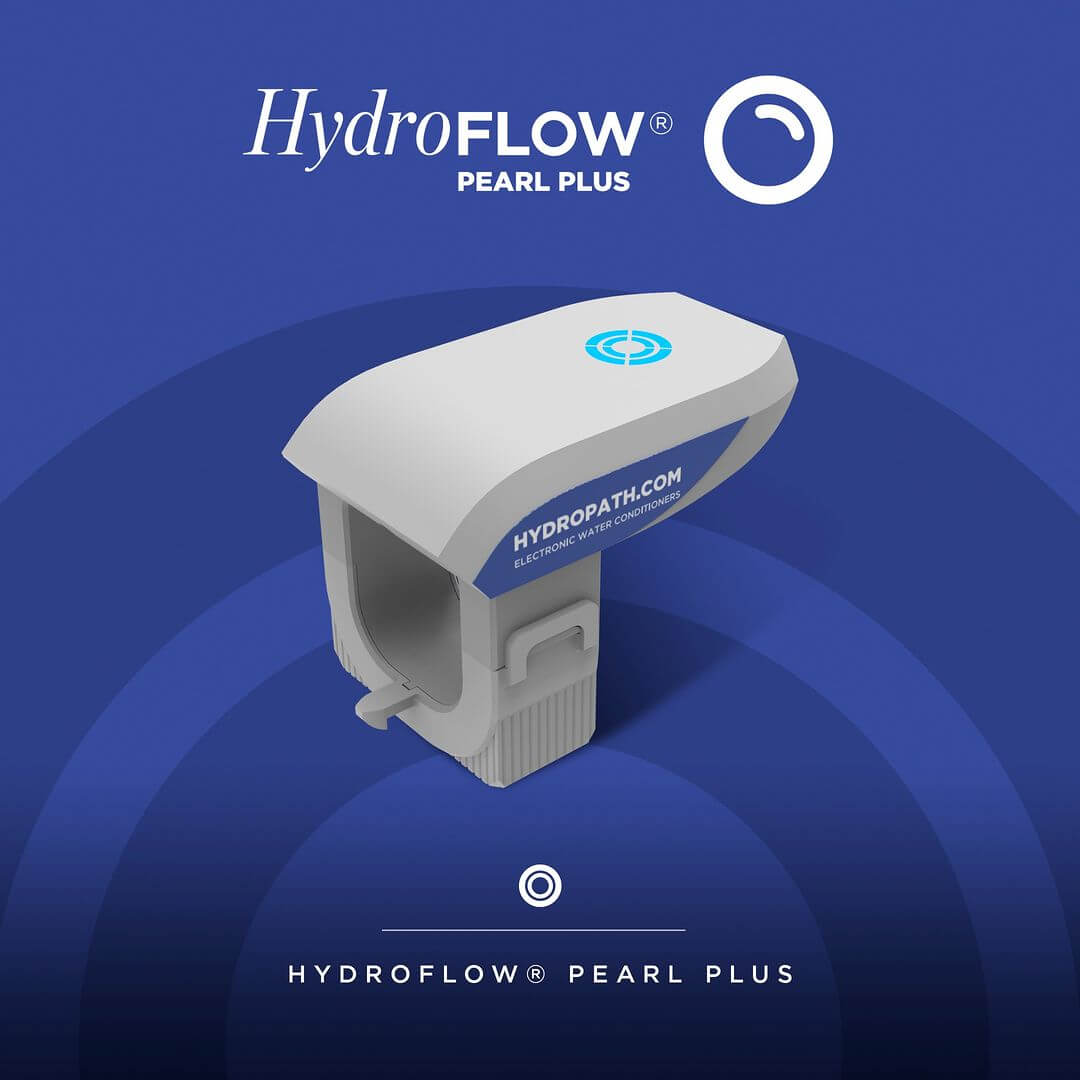
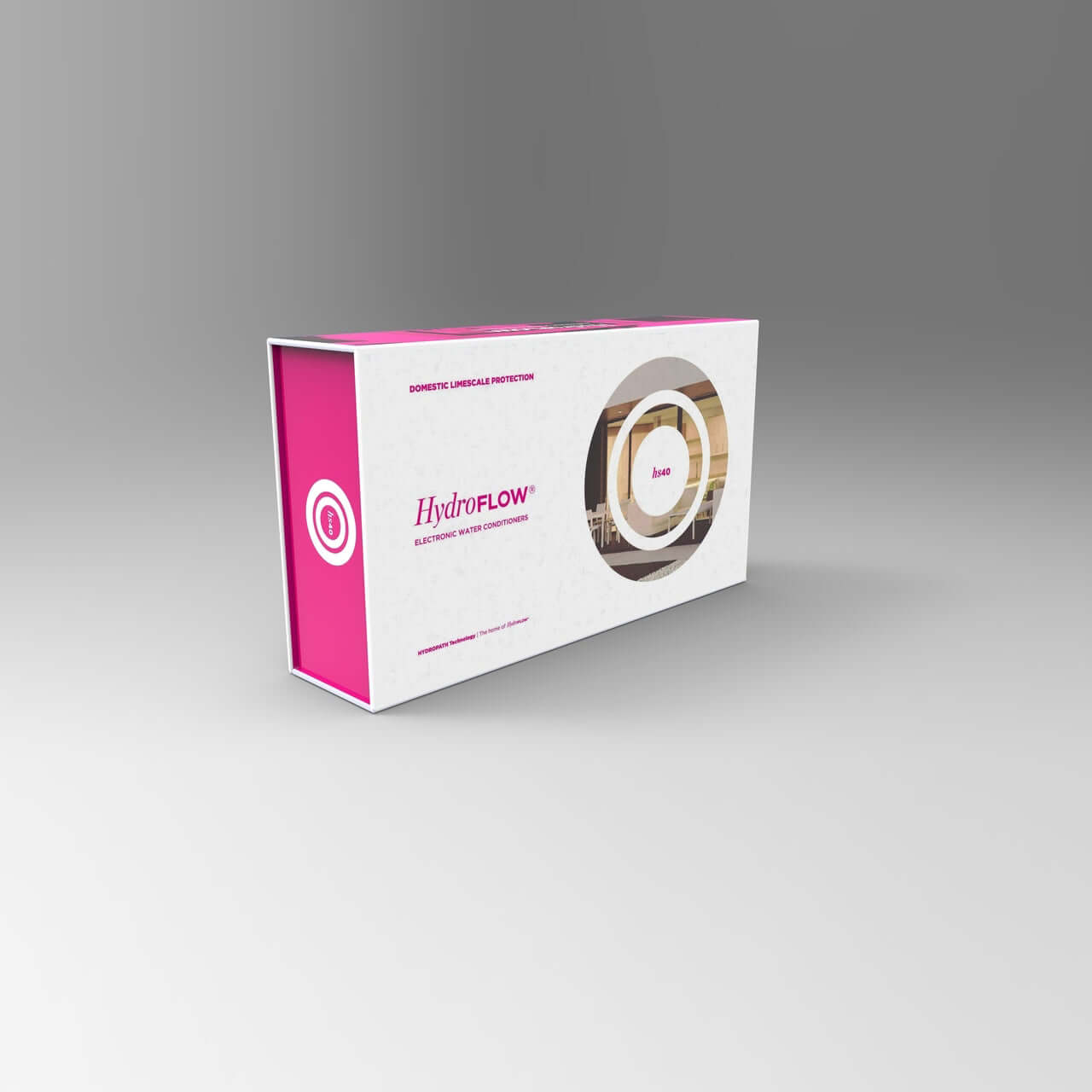

Keep the K40 pool/spa option clearly separate from the residential evidence discussed above — the studies cited in this review do not extend to claims about pool sanitation, chemical dosing or K40 performance.
Already sold on HydroFLOW and just need to pick a model? See our detailed HydroFLOW Pearl vs Pearl PLUS vs HS40 comparison for home-size guidance, pipe-size compatibility and current Canadian pricing.
Pros & Cons
| Pros | Cons |
|---|---|
| Salt‑free & chemical‑free | Requires nearby electrical outlet |
| Low maintenance | Higher upfront cost vs. basic softeners |
| Fits existing plumbing (no major replumb) | Does not reduce measured water hardness — evaluate a certified softener instead if that is your goal |
Frequently Asked Questions
What is HydroFLOW and how does it work?
HydroFLOW clamps around a pipe and uses a coil and ferrite core to create an electrical signal intended to change how scale forms and adheres. That's the manufacturer's explanation of the mechanism. Independent research on similar devices supports scale-control effects in specific test conditions, but it is not a guarantee of results in every home — see our evidence review above.
Is HydroFLOW better than a salt-based water softener?
They solve different problems. A salt-based softener removes the minerals that cause hardness; HydroFLOW is designed to manage scale buildup without removing those minerals. If your goal is measured hardness reduction or the "soft water feel," a certified softener addresses that directly. If your goal is less stubborn scale on fixtures and heating elements, scale conditioning is the relevant category to evaluate.
How long does HydroFLOW take to remove limescale?
We did not find evidence establishing a reliable timeline for this outcome in occupied Canadian homes. Rather than expecting a fixed result by a certain date, document a baseline before installation, keep other conditions steady, and assess against your own defined outcome at an agreed review date — see our evaluation checklist above.
Where to buy HydroFLOW in Canada?
See our quick picks above or shop all HydroFLOW models.
Does HydroFLOW work with well water?
HydroFLOW is often installed on private wells for scale management, but well water can carry other concerns — such as bacteria, nitrates or specific contaminants — that scale conditioning does not address. Test your well water and use treatment matched to whatever it identifies; don't treat reduced scale as evidence that your water is otherwise safe.
What maintenance does HydroFLOW need?
There's no salt or media to replace. Keep the device powered and dry, and occasionally verify indicator lights and the physical connection per your model's manual.
Sources & Methodology
This review separates supplier specifications and terms from experimental findings and our editorial judgment. We have not conducted a household installation test. The research cited below uses different settings and evidence types; it is not a set of equivalent head-to-head trials. Affiliate commissions do not establish product effectiveness. Sources were reviewed September 7, 2026 — that date records our access, not proof that a seller changed its terms that day.
- Jiang et al., "A Pilot Study of an Electromagnetic Field for Control of Reverse Osmosis Membrane Fouling and Scaling During Brackish Groundwater Desalination," Water, 2019, 11(5), 1015. mdpi.com (DOI: 10.3390/w11051015)
- Shults, H. & Williams, S., "The Effect of Hydroflow Devices on Calcium Carbonate Buildup in a Heated Water Flow Loop System," University of Louisville, ASME conference abstract 166296. imece.secure-platform.com
- Health Canada, Guidelines for Canadian Drinking Water Quality — Operational Parameters (March 2025). canada.ca
- Health Canada, Drinking water and health: Treatment (December 2025). canada.ca
- Health Canada, Well water and your health: Treat your well water. canada.ca
- Hydropath, How it works. hydropath.com
- HydroFLOW Canada, Pearl product page. hydroflow.ca
- HydroFLOW Canada, satisfaction guarantee and limited warranty. hydroflow.ca
- HydroFLOW Canada, refund policy. hydroflow.ca